Fishermen Approach an Iceberg to Save a Stranded Animal—But What They Discover Is Far More Terrifying
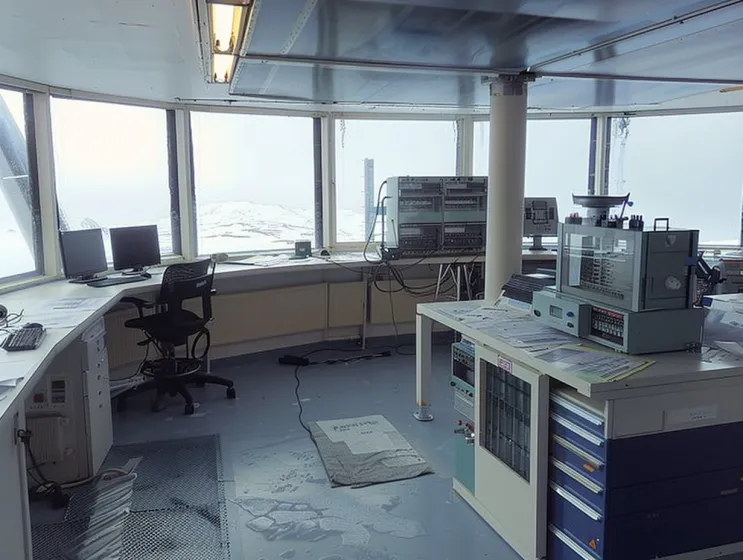
Tanner hesitated for a moment, the heavy silence pressing down on him as he wondered what might be inside. But the sun was dipping low, and shelter was his only hope to survive the brutal Arctic night. Taking a deep breath, he pushed the door open and stepped inside.
The air was thick with rust and decay, and the dim light filtering through frost-covered windows revealed a space long abandoned. Old machinery lined the walls, their metal surfaces dulled and corroded by years of neglect.
Tanner’s breath fogged in the cold air as he took in his surroundings. This place felt like a tomb—but it was also his only chance. The chill gnawed at his bones, and he knew he needed to find something to keep himself and the cub warm.
His gaze settled on a stack of tarps in the corner, stiff but still usable despite the cold. Wrapping one around himself and the cub, Tanner felt a faint warmth, though it barely kept the biting cold at bay.
Exhaustion weighed on him as he huddled against the wall, the pounding of his own heartbeat loud in the silence. The day’s ordeal had left him drained, and now, in the fragile safety of the weather station, fatigue washed over him like a wave.
Just as he began to drift into a restless sleep, a faint noise caught his attention—subtle and out of place in the stillness. At first, Tanner shrugged it off as wind or the tricks of a weary mind.
But the sound lingered—a low, steady static, like an old radio struggling to catch a signal. Tanner’s heart quickened as he strained to listen. Was it real?
After all, there was no one here but him and the cub. Yet the static grew louder, cutting through the silence with an unsettling persistence. Tanner sat up sharply, his body taut with a mixture of hope and dread.