
Beach Goers See Hundreds Of Mysterious Eggs Washing Ashore—What Follows Leaves Them Speechless
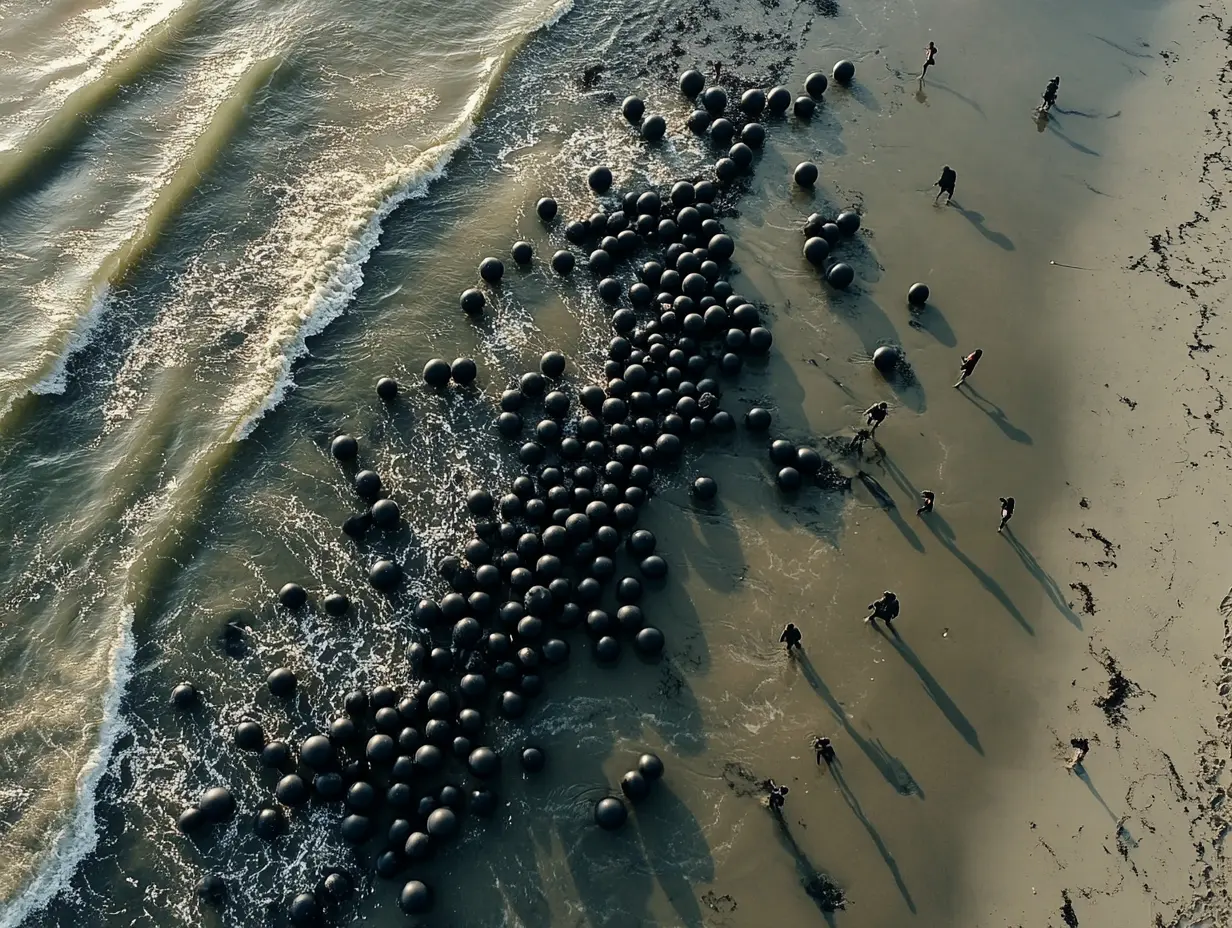
Arthur made his way down the familiar path to the beach, his boots crunching softly against the sand-dusted boardwalk. He expected the usual sights—seagulls, gentle waves, maybe a few early risers in the water. But what he saw brought him to an abrupt halt.
The shoreline was packed—but not with people. Dozens of dark shapes littered the shallows. They were jet black, oval, and glistening like stones soaked in oil. At first, they floated silently. Then one of them twitched. A ripple spread outward. Another gave a faint, rhythmic pulse, as if something inside was breathing through a membrane. The silence that followed felt unnaturally heavy.
Arthur didn’t scream. He couldn’t. Not with those things—dozens of them—drifting just past the breakers. Shiny, black, pulsing. The beach had been full of laughter just moments earlier. Now it rang with screams, hurried footsteps, scattered toys, and panicked parents pulling their children away from the sea.
Arthur Finch woke just before dawn, as he always did. A pale sliver of light had begun to creep across the eastern sky, faintly visible through the salt-blurred pane of his small bedroom window. Outside, the gentle rhythm of waves rolling onto the shingle beach played its usual, comforting tune.
He sat up and swung his legs over the edge of the bed, his feet meeting the cool, worn floorboards with a quiet thud. The cottage still held the lingering scent of last night’s fire, mingled with the ever-present tang of sea air—smells he had long since come to accept as home.
In the kitchen, he filled the old kettle and set it on the gas stove. While it began to heat, he stepped out onto the porch. The morning air was cool and damp, heavy with salt and dew. Without really thinking, he let his eyes drift toward the sea—part of his daily rhythm.
The water was still and glass-like, with the tide slowly rolling in. “Good tide for fishing,” he muttered. He glanced at the faded windsock tied to the porch railing—it barely stirred. Back inside, he poured his tea and flipped on the small radio perched on the windowsill.
For the past week, a string of undersea tremors had rattled the coastline, followed by warnings about dangerous tidal surges. Arthur hadn’t dared take the Sea Spray out—not with talk of “massive tide risks” and shifting sandbars.
But this morning’s update was different: no seismic activity overnight, and all advisories had been lifted. Arthur exhaled, only then realizing he’d been holding his breath. At last, things had settled. It was safe again.